
7 Common Causes of Refrigerant Leaks & How to Repair Them
Learn the top causes of industrial refrigerant leaks, detection methods, repair approaches, and prevention tips for ammonia and CO₂ systems.
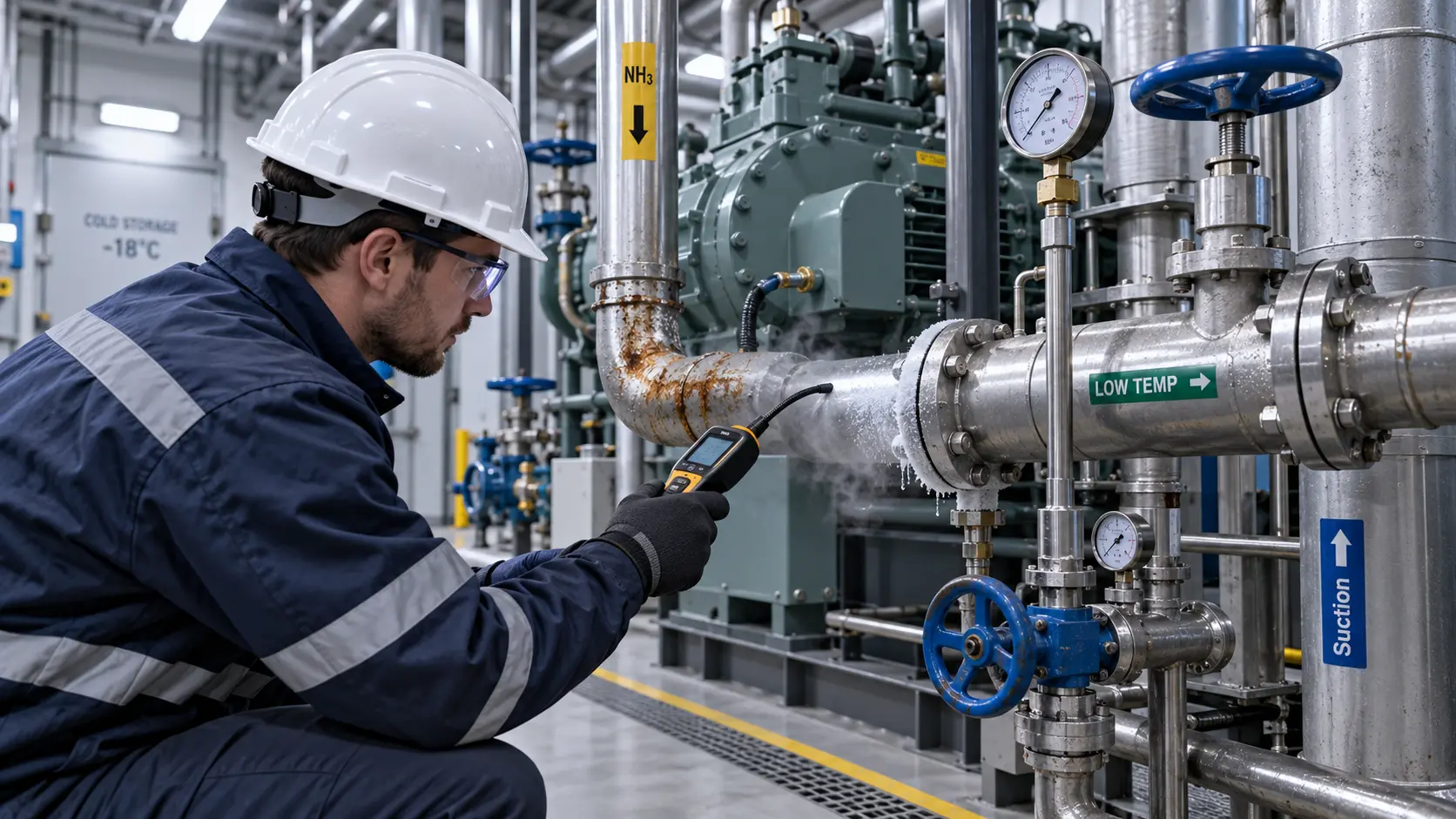
Refrigerant leaks can disrupt cooling, increase service costs, and lead to unplanned downtime. For Ontario facilities relying on cold storage refrigeration or food processing refrigeration systems, a loss of cooling capacity can also put temperature-sensitive products and production schedules at risk.
Leaks can develop in piping, valves, joints, compressor seals, and other refrigerant-containing components. Finding the leak is essential, but a lasting repair also requires understanding why the component failed.
This guide explains common causes of industrial refrigerant leaks, how technicians investigate them, and how preventive maintenance can help reduce recurring problems.
Key Takeaways
- Industrial refrigerant leaks can result from corrosion, vibration, worn seals, physical damage, faulty joints, and excessive pressure.
- A lasting repair addresses both the leak and the underlying cause of the failure.
- Ammonia and CO₂ systems require refrigerant-specific detection equipment and qualified service personnel.
- Regular inspections and preventive maintenance help identify developing problems and reduce avoidable downtime.
- Enns provides industrial refrigeration troubleshooting, repairs, and 24/7 emergency service in Ontario.
What Causes Refrigerant Leaks in Industrial Refrigeration Systems?
The cause depends on the refrigerant, equipment condition, system design, and operating environment. Several issues deserve particular attention.
1. Corrosion of Piping and Components
Corrosion can weaken refrigeration piping and other components over time. On insulated piping, damaged insulation or vapour barriers can allow moisture to reach the metal underneath, making deterioration difficult to spot.
Rust, damaged coatings, and deteriorating insulation should prompt further inspection. The appropriate repair may involve replacing affected piping or components and correcting the conditions that allowed corrosion to develop.
Inspection of piping, insulation, valves, and other equipment is an important part of preventing unexpected failures. The EPA’s ammonia refrigeration accident-prevention manual highlights these checks as part of ongoing system maintenance.
2. Excessive Vibration
Abnormal vibration can damage refrigeration equipment and connected piping. A leaking connection may therefore be a symptom of a broader mechanical problem.
Repairing the leak without investigating the vibration can leave the replacement component exposed to the same conditions. Technicians may need to assess the rotating equipment, mounting arrangements, and piping supports.
Where vibration is a recurring concern, industrial refrigeration vibration analysis can help investigate equipment condition and guide maintenance decisions.
3. Worn Seals and Compressor or Pump Damage
Seals and other components can deteriorate through wear or abnormal operating conditions. Lubrication problems and mechanical damage can also contribute to failures in compressors and pumps.
The repair should reflect the condition of the equipment. Some failures require a component replacement, while more extensive damage may warrant a rebuild or replacement of the assembly.
Enns’ refrigeration compressor rebuild services address equipment that needs more substantial attention. For an overview of what that work involves, read our guide to compressor overhauling.
4. Physical Damage
Forklifts, vehicles, and other mobile equipment can strike exposed piping, valves, or refrigeration equipment. Even when damage appears minor, an impact should be reported and assessed.
Repairing the affected component addresses the immediate problem. Reviewing traffic routes and adding suitable barriers or bollards can help reduce the chance of another impact.
5. Leaking Valves, Connections, and Joints
Valves, seals, flanges, and joints are potential leak locations. Deterioration, installation defects, movement, or damage can compromise their integrity.
Technicians need to establish whether the leak comes from the connection, sealing element, or component itself. The repair may involve replacing a seal, remaking a joint, or replacing the affected valve or fitting.
For CO₂ systems, piping, fittings, and joining methods must also be suitable for the pressures expected in that part of the system.
6. Trapped Liquid and Excessive Pressure
Liquid refrigerant trapped between closed valves can develop excessive pressure as it warms. This deserves particular attention in CO₂ systems because of the refrigerant’s expansion characteristics.
Suitable pressure-relief protection and system-specific isolation procedures are essential. Technicians must account for trapped liquid and the pressures that can develop during operation and servicing.
If pressure-related failures recur, an assessment of the refrigeration system design, controls, and operating conditions may be needed alongside the immediate repair.
7. Pressure-Relief Valve Leakage
A pressure-relief valve may discharge because it is responding correctly to excessive pressure. That event still needs investigation.
Some valves may leak after discharging. Inspection and replacement requirements depend on the equipment and manufacturer’s instructions.
The technician must assess both the relief equipment and the cause of the pressure increase. Replacing a valve alone will not resolve an ongoing pressure problem elsewhere in the system.
How Are Industrial Refrigerant Leaks Detected?
Leak investigation combines equipment inspection, operating information, and detection tools suitable for the refrigerant.
Inspection and Operating History
Useful findings can include:
- Corrosion or damaged insulation.
- Physical damage to piping or equipment.
- Oil staining near refrigerant-containing components.
- Abnormal vibration or equipment noise.
- Detector alarms or a history of unexplained refrigerant additions.
These findings guide the investigation but do not necessarily identify the exact leak location. Temperature problems alone also do not confirm a leak; other refrigeration faults can cause similar symptoms.
Maintenance records help technicians understand whether a problem is new, recurring, or connected to previous repairs.
Fixed and Portable Detection Equipment
Fixed detectors monitor designated areas for refrigerant releases. Portable instruments help qualified technicians locate the source.
Detection equipment must suit the refrigerant involved. CO₂ requires suitable R744 detection equipment; it cannot be identified by smell. Sensors and alarms also need testing and maintenance according to the equipment requirements.
Enns provides industrial refrigeration troubleshooting to investigate leaks and related operating problems.
How Are Refrigerant Leaks Repaired?
There is no universal repair procedure. The refrigerant, leak location, equipment design, and conditions at the facility determine the appropriate response.
A professional repair generally involves four stages:
- Locate and assess the leak. Identify the failed component and inspect related equipment for contributing damage or deterioration.
- Make the equipment safe for service. Qualified personnel follow the facility’s procedures and the manufacturer’s requirements for isolation and refrigerant handling.
- Repair or replace the affected component. Corrective work may involve piping, joints, valves, seals, compressors, or pressure-relief equipment.
- Verify the repair and address the cause. Complete the applicable checks before returning equipment to service, and document any further corrective work.
For facility managers, the key question is whether the repair also addresses the reason for failure. Corrosion, vibration, impact damage, and pressure problems can cause repeat leaks if those conditions remain unresolved.
Ammonia and CO₂ Systems Need Different Service Approaches
Ammonia and CO₂ are both used in industrial refrigeration, but their detection equipment, hazards, operating pressures, and service procedures differ.
Enns offers ammonia refrigeration services, including leak detection, repairs, maintenance, and emergency support. Our article on ammonia leak causes, detection, and prevention explores that refrigerant in more detail.
For facilities using R744, CO₂ refrigeration services must account for the system’s pressure ratings and refrigerant behaviour during operation and servicing.
A suspected release should be handled under the facility’s emergency procedures. Personnel should not enter an affected area or attempt valve isolation unless trained and authorized to do so. Where there is immediate danger, evacuate and contact emergency services.
How Preventive Maintenance Helps Reduce Refrigerant Leaks
Routine maintenance helps identify deterioration before it becomes a larger equipment failure. A practical programme should include:
- Inspecting accessible piping, valves, joints, and equipment.
- Checking insulation, vapour barriers, and protective coatings.
- Investigating unusual vibration and recurring equipment faults.
- Maintaining refrigerant detectors and alarms.
- Reviewing previous leaks, repairs, and relief events.
- Tracking corrective actions through to completion.
Our industrial refrigeration maintenance checklist provides a broader reference for facility teams.
Enns’ preventive refrigeration maintenance agreements help facilities plan ongoing service around their equipment and operational needs.
Get Industrial Refrigeration Leak Support in Ontario
Refrigerant leaks often point to an underlying equipment or operating problem. Effective service combines leak detection, appropriate repairs, and corrective work that helps prevent the same failure from returning.
Enns Industrial Refrigeration Ltd. is a family-run contractor with more than 20 years of experience supporting Ontario businesses. From investigating recurring leaks to repairing equipment and planning preventive maintenance, our team helps facilities address refrigeration problems at their source.
Contact Enns for industrial refrigeration troubleshooting and repair in Ontario.
For 24/7 emergency refrigeration service, call 647-643-4110.
Frequently Asked Questions About Industrial Refrigerant Leaks
What are the most common causes of industrial refrigerant leaks?
Common causes include corrosion, excessive vibration, worn seals, physical damage, leaking valves, faulty connections, and excessive pressure. The exact cause depends on the equipment, refrigerant, and operating conditions.
Does a refrigerant leak always mean the equipment needs replacing?
No. Some leaks can be corrected by repairing a joint or replacing a seal, valve, or other component. More extensive deterioration may require a larger repair. The decision depends on equipment condition and the underlying cause.
Should you add refrigerant if the system charge is low?
An unexplained loss of refrigerant should be investigated. Repeatedly adding refrigerant without identifying and correcting the leak leaves the equipment problem unresolved.
Are ammonia and CO₂ leaks repaired the same way?
No. Although both require finding and correcting the source, their detection methods, pressure considerations, and isolation procedures differ. Repairs should be handled by personnel qualified to service the specific system.
Can preventive maintenance eliminate every leak?
No maintenance programme can guarantee a leak-free system. Regular inspections and timely corrective work can, however, help identify developing problems and reduce avoidable failures.
Industrial Refrigeration Experts
Trusted by some of Ontario’s finest for over 20 years.
Speak With a Technician Today
